KAIST · InnoCORE AI Postdoctoral Fellow
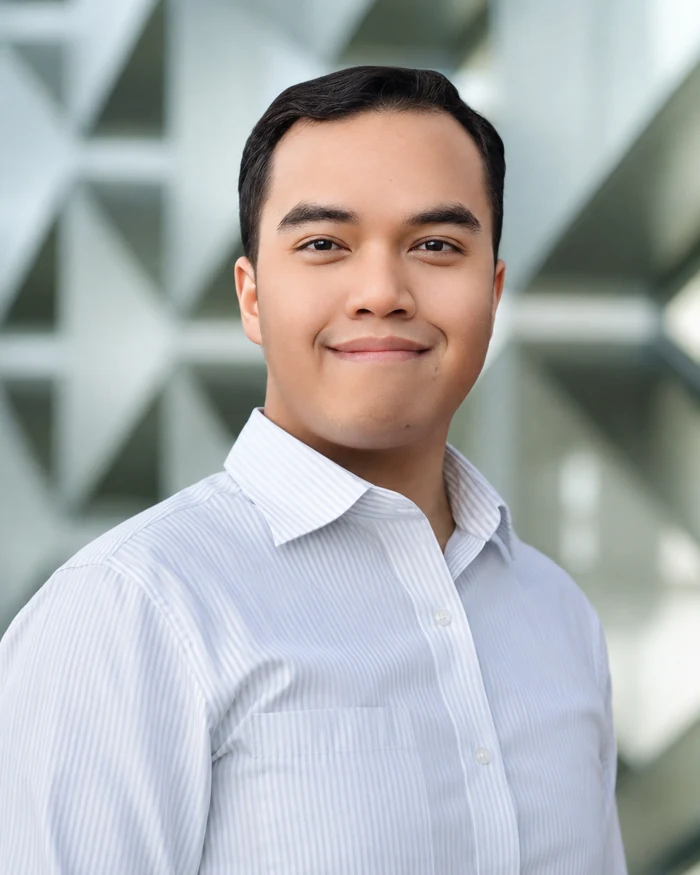
Ryanda Enggar Anugrah Ardhi, Ph.D.
Materials Scientist & Electrochemist
I study electrochemical interfaces and interphases in rechargeable batteries, with emphasis on how local chemistry, ion transport, charge transfer, and metal deposition affect reaction kinetics and long-term stability.
At KAIST, I work on Li-S and anode-free Li-S batteries using electrolyte formulation, functional current collectors, interfacial coatings, and structurally integrated cell designs. Earlier projects span Li-ion, Li-metal, Zn-metal, Zn-ion, Zn-air, photo-batteries, photovoltaics, thin-film transistors, sensors, and other solid-state and electrochemical devices.
Research program
Interfacial evolution under electrochemical and mechanical operation
My current research examines what remains after a battery interface is disturbed. I track polarization, impedance, interphase chemistry, and morphology as current, electrolyte composition, electrode loading, or mechanical constraint changes, then compare the recovered state with the original reference condition.
Interfacial evolution
Track interphase chemistry, morphology, impedance, and charge-transfer response during cycling and metal plating and stripping, then compare the cell after it returns to a defined reference condition.
Solvation, transport, and reaction kinetics
Connect changes in solvation, ionic and electronic transport, nucleation, and interphase chemistry with electrochemical kinetics and stability.
Battery and integrated-cell architectures
Test these relationships in Li-S, anode-free Li-S, Li- and Zn-metal, Li-ion, and mechanically integrated cells. For Li-S, this includes high sulfur areal loading and lean-electrolyte operation. For integrated cells, it includes mechanical constraints.
Research snapshots
Current work and earlier results
High-energy Li-S & anode-free Li-S
Electrolyte formulation, functional current collectors, Co-MOF interfaces, catalytic interlayers, high sulfur areal loading, pouch cells, and structural-battery integration.
Concentration-dependent dual-interphase regulation
Track how additive concentration and Li-ion solvation influence sulfur conversion, Li-metal stability, and interphase composition at both electrodes.
Metal-anode interfaces and interfacial physics
Use semiconductor contacts, dielectric layers, and ion-conductive nanomembranes to control Li- and Zn-metal nucleation, deposition uniformity, and plating/stripping reversibility.
Structural & integrated electrochemical power systems
Examine electrochemical behavior in non-planar and mechanically integrated cells, where geometry, pressure, deformation, and structural function directly affect cell operation.
Research path
Research across batteries, materials, and devices
KAIST · InnoCORE AI Postdoctoral Fellow
Li-S and anode-free Li-S batteries, electrolyte and interphase regulation, functional current collectors, structural-battery integration, and graduate research guidance.
KAUST · Postdoctoral Fellow
Built battery and electrochemistry capability in a laboratory focused on organic electronics and photovoltaics, while also working on Zn-metal batteries, thin-film devices, sensors, and nanogap electrochemistry.
KIST · Ph.D. Researcher / Postdoctoral Researcher
Ph.D. and postdoctoral research on Li-ion, Li-S, Li- and Zn-metal systems, Zn-air and photo-batteries, photovoltaics, and functional nanomaterials, with interfaces and thin films as recurring themes.
Kookmin University · Ph.D. Researcher
Synthesized PbS quantum dots, optimized inverted PbS quantum-dot solar cells across repeated device batches, and trained three master’s researchers in experimental work.
Current affiliations
KAIST research environment
I am an InnoCORE AI Postdoctoral Fellow in the Department of Mechanical Engineering at KAIST, working with Prof. Il-Kwon Oh. My current research is carried out within the KAIST PRISM-AI Center and the Soft Robotics and Intelligent Materials Laboratory (SRIM Lab).


Appointment: InnoCORE AI Postdoctoral Fellow, KAIST
Academic path
Academic and research institutions




Academic work
Research output and project experience
My work also includes funded proposals and multi-institution research projects, graduate research guidance, university teaching, journal review, conference presentations, patents, and technology-focused research.
Current affiliation
Korea Advanced Institute of Science and Technology (KAIST)
InnoCORE AI Postdoctoral Fellow · Daejeon, Republic of Korea